
Language Overview
Polish
Polski
Polish is a West Slavic language with over 45 million speakers, known for its complex consonant clusters and seven grammatical cases.
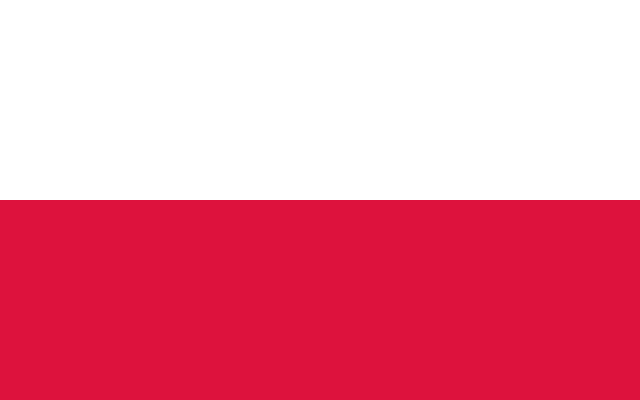
Overview
Polish is a West Slavic language spoken primarily in Poland. It is one of the official languages of the European Union and has a rich literary tradition.
Alphabet
The Polish alphabet is based on the Latin script but includes nine unique characters (ą, ć, ę, ł, ń, ó, ś, ź, ż). In total, there are 32 letters. Note that q, v, and x are only used in foreign loanwords.
1. The "Standard" Letters
These look and sound very similar to their English counterparts.
| Letter | Pronunciation (English) | IPA | Example |
|---|---|---|---|
| A a | a as in father | [a] | adres |
| B b | b as in bat | [b] | brat (brother) |
| D d | d as in dog | [d] | dom (house) |
| E e | e as in set | [ɛ] | ekran (screen) |
| F f | f as in fat | [f] | fatygować |
| G g | g as in go | [ɡ] | góra (mountain) |
| I i | ee as in meet | [i] | igła (needle) |
| K k | k as in kite | [k] | kot (cat) |
| L l | l as in lamp | [l] | lustro (mirror) |
| M m | m as in man | [m] | mama |
| N n | n as in no | [n] | noc (night) |
| P p | p as in pet | [p] | park |
| S s | s as in set | [s] | syn (son) |
| T t | t as in tap | [t] | tato (dad) |
| U u | oo as in boot | [u] | ucho (ear) |
2. The Unique Polish Characters
These are the letters with diacritics (the "tails," "dots," and "slashes").
| Letter | Name | Pronunciation (English) | IPA |
|---|---|---|---|
| Ą ą | A z ogonkiem | Nasal "own" (like French bon) | [ɔ̃] |
| Ć ć | Cie | Soft ch as in cheep | [t͡ɕ] |
| Ę ę | E z ogonkiem | Nasal "en" (like French bien) | [ɛ̃] |
| Ł ł | eł | w as in water | [w] |
| Ń ń | eń | ny as in canyon | [ɲ] |
| Ó ó | o z kreską | oo as in boot (same as u) | [u] |
| Ś ś | eś | Soft sh as in sheep | [ɕ] |
| Ź ź | ziet | Soft zh (like the 's' in pleasure) | [ʑ] |
| Ż ż | żet | Hard zh (like a buzzy "j") | [ʐ] |
3. The "False Friends" & Tricky Sounds
These look like English letters but represent completely different sounds in Polish.
| Letter | Pronunciation (English) | IPA | Notes |
|---|---|---|---|
| C c | ts as in sits | [t͡s] | Never a "k" or "s" sound |
| H h | h as in house | [x] | Same sound as ch |
| J j | y as in yes | [j] | Never a "dzh" sound |
| R r | rolled r | [r] | Always trilled |
| W w | v as in van | [v] | Never a "w" sound (that is ł) |
| Y y | i as in bit | [ɨ] | A hard "i" sound |
4. Digraphs (Two Letters, One Sound)
Polish uses combinations of letters to create specific consonant sounds.
- CH: Pronounced like H [x] (e.g., chleb - bread).
- CZ: A hard ch as in chop [t͡ʂ].
- DZ: A voiced "ts" (like the "ds" in peeds) [d͡z].
- DŹ: A soft "j" sound [d͡ʑ].
- DŻ: A hard "j" sound [d͡ʐ].
- RZ: Pronounced exactly like Ż [ʐ] (e.g., rzeka - river).
- SZ: A hard sh as in shut [ʂ].
5. Pro-Tips
The "I" Rule (Softening)
In Polish, the letter i often acts as a "softener" for the consonant before it.
- Ci is pronounced exactly like Ć.
- Si is pronounced exactly like Ś.
- Ni is pronounced exactly like Ń.
If you see an i before another vowel (e.g., miasto), you don't really pronounce the "ee"—it just softens the "m."
The "Three Sh/Ch" Sounds
Polish distinguishes between "Hard" and "Soft" sounds very strictly. This is the hardest part for English speakers:
- Hard: CZ, SZ, Ż/RZ (Tongue is retracted, sounds "darker").
- Soft: Ć, Ś, Ź (Tongue is flat against the roof of the mouth, sounds "hissier").
Fixed Stress
Unlike Russian where stress moves around, Polish is easy: the stress almost always falls on the second-to-last syllable.
Example: war-SZA-wa, kra-KÓW, re-stau-RAC-ja.
W vs. Ł
- W is always V.
- Ł is always W.
So, the word for "easy" łatwy, is pronounced WAT-vy.
Sound Features
Polish is known for:
- Complex consonant clusters
- Nasal vowels (ą, ę)
- Palatalization
- Stress always on the penultimate syllable
Key Grammar Highlights
Polish grammar includes:
- Seven grammatical cases
- Three grammatical genders
- Complex verb conjugation
- Aspect system for verbs (perfective/imperfective)
Related Languages
Polish is most closely related to Czech and Slovak. It also shares similarities with other West Slavic languages like Sorbian.
Basic Phrases
- Hello: Cześć / Dzień dobry
- Thank you: Dziękuję
- Yes: Tak
- No: Nie
- Please: Proszę
Resources
- Polish language learning materials
- Polish media and literature
- Language exchange programs
- Online dictionaries and grammar resources