
Language Overview
Bulgarian
Български
Bulgarian is a South Slavic language spoken by 8 million people, unique for having no case system and a distinctive head gesture for yes and no.
Overview
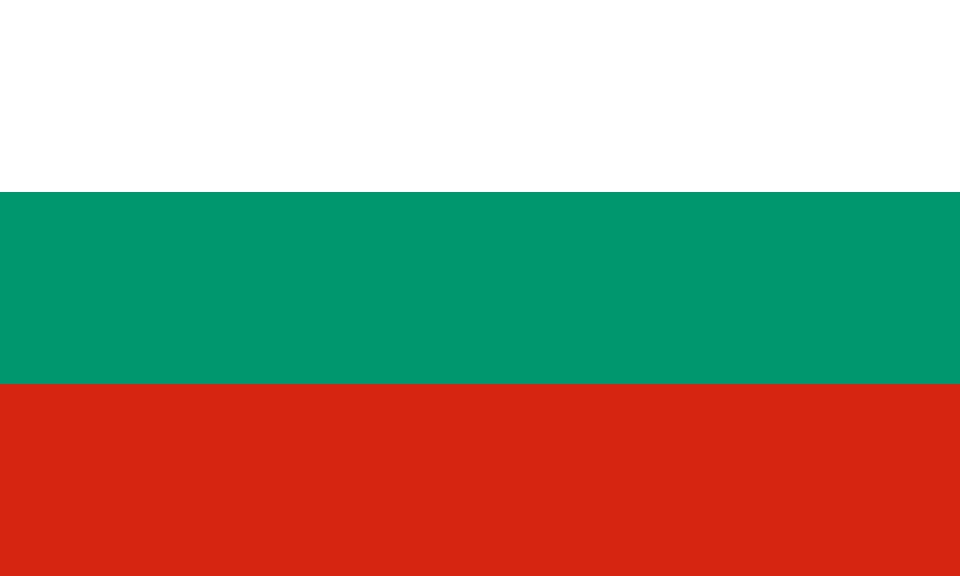
Bulgarian is a South Slavic language spoken primarily in Bulgaria. It is one of the oldest written Slavic languages and the official language of Bulgaria and the European Union.
Alphabet
The Bulgarian alphabet uses the Cyrillic script. It consists of 30 letters. Historically, Bulgarian is the birthplace of the Cyrillic script, and while it looks like Russian, the pronunciation of certain letters is unique.
1. The "Easy" Letters
These look and sound like English.
| Letter | Name | Pronunciation (English) | IPA | Example |
|---|---|---|---|---|
| А а | A | a as in father | [a] | акула (shark) |
| К к | Ka | k as in kite | [k] | кора (bark) |
| М м | Em | m as in man | [m] | мост (bridge) |
| О о | O | o as in bore | [o] | око (eye) |
| Т т | Te | t as in tap | [t] | танк (tank) |
2. The "False Friends"
Letters that look like English but sound different.
| Letter | Name | Pronunciation (English) | IPA | Notes |
|---|---|---|---|---|
| В в | Ve | v as in vet | [v] | Looks like 'B' |
| Н н | En | n as in no | [n] | Looks like 'H' |
| Р р | Er | r as in roll (rolled R) | [r] | Looks like 'P' |
| С с | Es | s as in set | [s] | Looks like 'C' |
| У у | U | oo as in boot | [u] | Looks like 'y' |
| Х х | Kha | h as in house | [x] | Like Scottish 'loch' |
3. The New Characters
Consonants and vowels unique to the Cyrillic script.
| Letter | Name | Pronunciation (English) | IPA |
|---|---|---|---|
| Б б | Be | b as in bat | [b] |
| Г г | Ge | g as in go | [g] |
| Д д | De | d as in dog | [d] |
| Е е | E | e as in met | [ɛ] |
| Ж ж | Zhe | s as in pleasure | [ʒ] |
| З з | Ze | z as in zoo | [z] |
| И и | I | ee as in see | [i] |
| Й й | I Kratko | y as in boy | [j] |
| Л л | El | l as in lamp | [ɫ] |
| П п | Pe | p as in pet | [p] |
| Ф ф | Ef | f as in fat | [f] |
| Ц ц | Tse | ts as in sits | [t͡s] |
| Ч ч | Che | ch as in chip | [t͡ʃ] |
| Ш ш | Sha | sh as in shut | [ʃ] |
| Ю ю | Yu | yu as in universe | [ju] |
| Я я | Ya | ya as in yard | [ja] |
4. The Critical Bulgarian Differences
This is what separates Bulgarian from Russian and other Slavic languages.
| Letter | Name | Pronunciation (English) | IPA | The Big Difference |
|---|---|---|---|---|
| Ъ ъ | Er Golyamo | u as in but | [ɤ] | In Russian, this is silent. In Bulgarian, it's a vowel. |
| Щ щ | Shta | sht as in finished | [ʃt] | In Russian, it's a soft "shch". In Bulgarian, it's S + T. |
| Ь ь | Er Malko | y (softens consonant) | [ʲ] | Only used before 'o' (ьо) to sound like "yo". |
5. Pro-Tips
The "Ъ" Vowel
The letter Ъ is the most Bulgarian sound. It's the "neutral" vowel (schwa-like, but more open). You see it in the name of the country itself: България (Bul-gar-i-ya).
No "Ye" for E
Unlike Russian, the letter Е is almost always a plain "e" (as in met). It does not have a "y" sound at the start unless it's the letter Я or Ю.
The "Sht" Rule
Whenever a reader sees Щ, they should just think of the English word "fish tank."
Example: Поща (Post office) is pronounced PO-shta.
Stress is Variable
Like Russian, Bulgarian stress can move. However, vowel reduction is less extreme than in Russian. An О usually stays sounding like an О, though it might become slightly more like a У if unstressed.
Sound Features
Bulgarian phonology includes:
- Stress patterns that can change word meaning
- Reduction of unstressed vowels
- Palatalization of consonants
- No pitch accent (unlike Serbian)
Key Grammar Highlights
Bulgarian is unique among Slavic languages for:
- No case system (cases were lost over time)
- Use of definite articles (the only Slavic language to have them)
- Complex verb system with multiple past tenses
- Use of the particle "да" for subordinate clauses
Related Languages
Bulgarian is most closely related to Macedonian. It also shares features with other South Slavic languages like Serbian and Croatian.
Basic Phrases
- Hello: Здравей / Здравейте
- Thank you: Благодаря
- Yes: Да
- No: Не
- Please: Моля
Cultural Note
Bulgarians traditionally shake their head for "yes" and nod for "no" - the opposite of most other cultures!
Resources
- Bulgarian language courses
- Bulgarian media and literature
- Language exchange programs
- Online dictionaries and grammar guides